The Day She Stopped Calculating the Cost of Leaving Home
On free transportation, women's rights and what mobility really means for the most marginalised
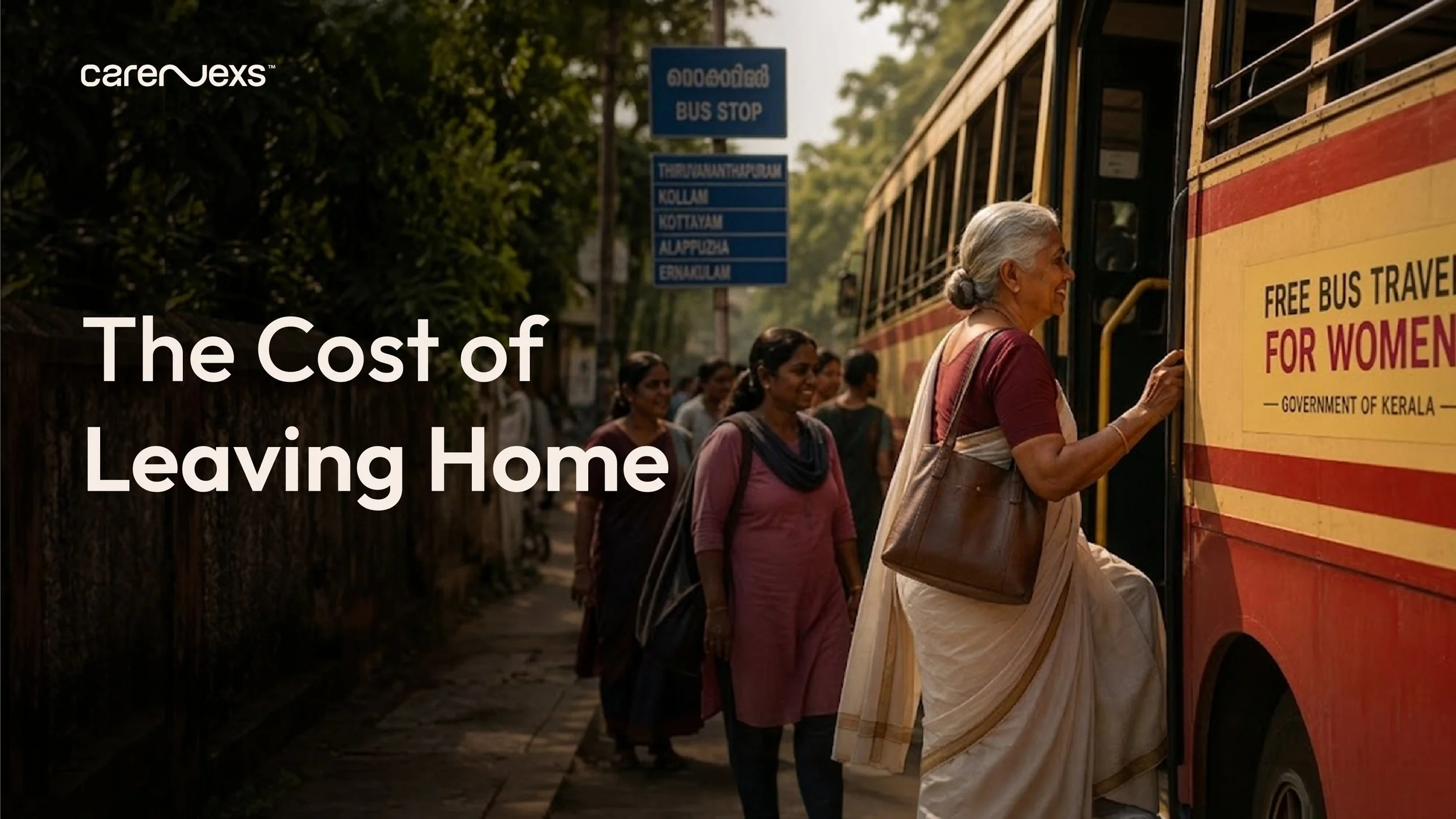
On June 15, Kerala made bus travel free for women on state-run services. Within days, the noise started. Populist, said some. Fiscally irresponsible, said others. An election stunt dressed in policy clothing, said a few more.
I have heard versions of this argument across many countries and over many years. And after 30 years working in gender and development across India, South and Southeast Asia, the Middle East, my instinct remains the same: we are debating the wrong thing. The question is not whether the state can afford to offer women a free bus ride. The question is why, for so long, we accepted that women had to calculate the cost of leaving their own homes.
Kerala is not alone in arriving at this. Tamil Nadu did it in 2021. Punjab in the same year. Karnataka launched Shakti in 2023. Telangana followed with Mahalakshmi. Delhi has had its Pink Ticket since 2019. West Bengal is now moving in the same direction. Eight states, different parties, different budgets, different geographies, the same conclusion. That is not a political trend. It is a recognition that something was overdue.
I want to step away from the policy for a moment.
I think of a woman I met during field work in Karnataka. Domestic worker. Three bus journeys a day, if she wanted to manage her employer, her mother's hospital appointments, and her daughter's school. She could not afford all three regularly. So she made choices that no one should have to make, quietly, without complaint, the way people do when they have simply accepted a constraint as permanent.
After Shakti, she stopped making those choices. She travels. She attends her mother's dialysis appointments without skipping. She joined a self-help group two neighbourhoods away, which she told me she would never have considered before, because she could not justify the fare.
That is not a welfare story. That is what development looks like when it reaches someone at street level.
There is a dimension to this that rarely gets named in the public debate. I work in elderly care now, alongside my broader development practice. And I want to say something directly about older women, because they are almost entirely absent from this conversation.
Picture a 70-year-old widow living in a modest part of Thiruvananthapuram. Her sons have migrated for work. She receives a small pension of her own under the government social security scheme. She depends on whatever remains after the household's expenses for any personal travel. If she needs to reach a government office to collect her welfare entitlement, she either waits for someone to take her, asks a neighbour, or quietly does not go.
Free transport changes that. Not dramatically, and not overnight. But in the way that most real change happens: small, practical, daily. She can reach the government hospital herself. She can attend the community health camp nearby. She can visit a friend, collect her own pension, and show up for her own life without first negotiating it through someone else.
India's elderly population is growing, and most older people living alone are women. Many are widowed, with no income of their own. We know from research that social isolation in old age connects directly to depression, faster cognitive decline, and higher mortality. A free bus pass does not fix any of that on its own. But it keeps a woman connected to the world outside of her four walls. In development terms, that connection is not a small thing, and it matters more than we acknowledge.
The numbers from the states that have run these schemes longer are worth pausing on.
Karnataka's Fiscal Policy Institute tracked what happened after Shakti launched. FPI observed the female labour force rise from about 25% to 30% during the period, a roughly five-percentage-point increase. More than 80% of beneficiaries reported better access to healthcare. Across 15 districts, 93% of women said their standing within their families had improved. In Telangana, according to government data, women collectively saved nearly 10,000 crore rupees over two years through the Mahalakshmi scheme. In Delhi, one in four women has started using public buses, and 15% of those who rarely or never used buses now use them regularly.
These are not bus statistics. They are labour statistics, health outcomes, and changes in household power that no survey fully captures. When a woman saves the fare, she redirects that money toward a child's school materials, a medicine she had been putting off, or a contribution to her savings group. The effect is small per trip and large over time.
For the most marginalised women, the ones doing daily wage work, selling in markets, working in other people's homes, the free bus is not a convenience. It is access. To jobs further away. To better-paid work, they had no way to reach. To hospitals, they were rationing. To colleges, their daughters can now attend without the family having to worryabout what the monthly commute costs.
The welfare label has always bothered me. Not because welfare is unimportant, but because it is applied selectively. When states build roads, no one asks who deserves to drive on them. When electricity reaches a village, no one checks whether households are productive enough to qualify. These are public goods. Women's access to public transport should sit in the same category. What makes it seem different is an assumption, rarely stated but quietly operative, that women's movement through public space is conditional. That it requires justification. That it is, somehow, less automatic than men's.
Free transport says the opposite. It says you do not need a purse or permission to move through your own city.
That is not charity. It is an entitlement. And the framing matters, because entitlements carry different weights. They are harder to remove. They belong to the person, not to whoever happens to be governing.
Some of the practical concerns raised about these schemes are worth taking seriously. A scheme without enough buses is a promise without delivery. West Bengal, which is moving toward this policy, has a limited number of state buses. That fleet will need to expandalongside the commitment, or the free pass simply means more women standing in longer queues. The walk to a poorly lit bus stop, especially for older women or women with disabilities, is a continuing barrier that a ticket alone cannot solve. These are real implementation gaps. There are reasons to invest in the policy properly, not reasons to abandon it.
Change at this scale also takes longer than one political cycle. Punjab and Tamil Nadu launched their schemes in 2021. The employment impacts there are now deeper and more visible than in the newer programmes. In the first year, women use the scheme cautiously. Then travel groups begin to form. Women start exchanging information about jobs, clinics, training programmes, and places where useful things are happening. That informal network building rarely shows up in impact assessments. But anyone who has spent time at the community level knows it is often where the most durable development actually occurs.
Kerala's announcement has triggered a debate we needed to have, even if most of it is aimed at the wrong target. The question was never about bus fares. It is about whose movement we consider worth investing in. About whether gender equality means anything when it carries a cost.
I have spent several years observing how restricted mobility limits a person's possibilities. From our fieldwork, I have learned to notice what shifts when a woman can simply go where she needs to go. The change is not always visible in the first year, but it is real.
A free bus ticket will not end poverty. It will not dissolve the structures that limit women's lives. It will not dismantle patriarchy. But it removes one barrier from a life that already carries too many. And sometimes that one barrier was the thing holding everything else in place.
I would like to hear from others in this space. Practitioners, community workers, policymakers. What are you seeing on the ground that the data has not yet found?
And for those working in ageing and elderly care: what role does mobility play in the daily lives of older women in the communities you work with? I would genuinely like to know.
The views here are personal, grounded in field experience across India, the Middle East, and South and Southeast Asia.