

Challenges Faced by the Elderly in India and Kerala
Demographic Shift
India’s elderly population is growing rapidly, with seniors (60+) accounting for 11% of the population today, projected to reach 15% by 2036 and over 20% by 2050. By 2046, India’s elderly will outnumber children under 15, signalling a major demographic shift that will challenge healthcare, social security, and economic planning.
Kerala has the fastest ageing population in India, driven by high life expectancy, low fertility, and youth migration. Seniors already form 16.5% of its population, projected to reach 22.8% by 2036 and nearly 30% by 2051, leading to a rising old-age dependency ratio and major demographic shift.
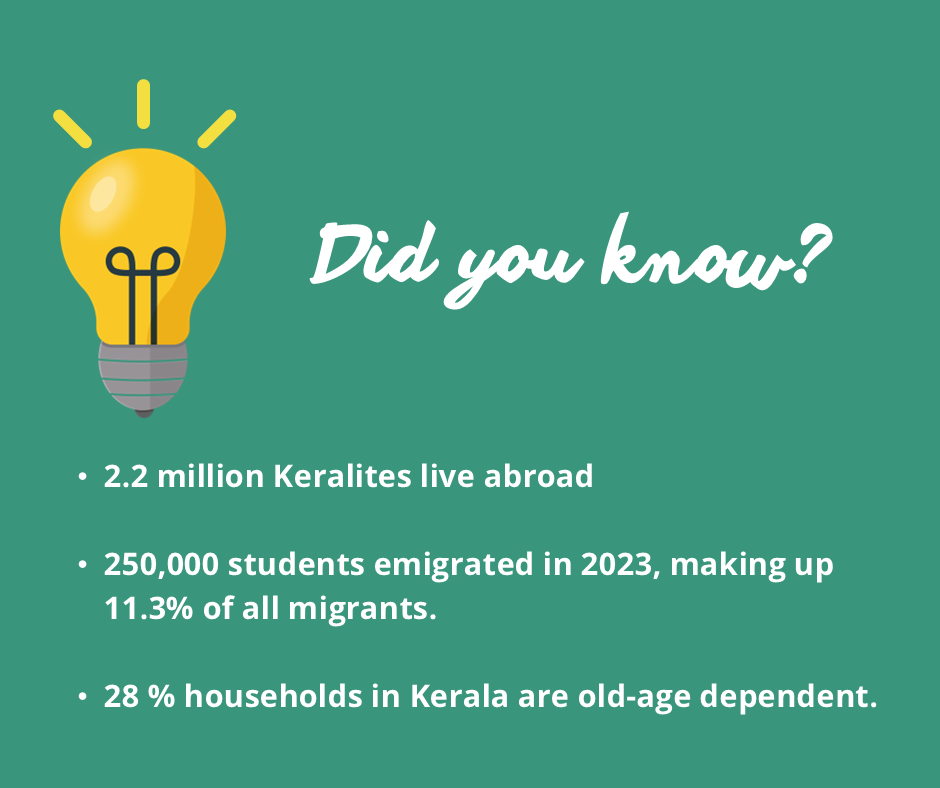
“Within ten years, one in every four people in Kerala will be aged above 60.”
— Sankala Foundation

Key Demographic Impacts
-
Fewer working-age adults must support a growing elderly population, straining healthcare, family interactions, and family resources
-
Such changes leaves many seniors without daily family support, increasing loneliness, institutional care demand, and mental health risks, especially among women
-
Heavy reliance on interstate migrants for low-skill jobs, altering social dynamics and integration challenges
-
Persistent low fertility and brain drain risk slowing productivity, innovation, and fiscal sustainability in long term
Social Shift
India’s social fabric is transforming from a tight-knit family caregiving model to one marked by isolation among the elderly and institutional dependence.
Kerala, with the highest elderly share at 16.5% and an old-age dependency ratio of 29.8%, faces sharper impacts as younger generations migrate for jobs and education.
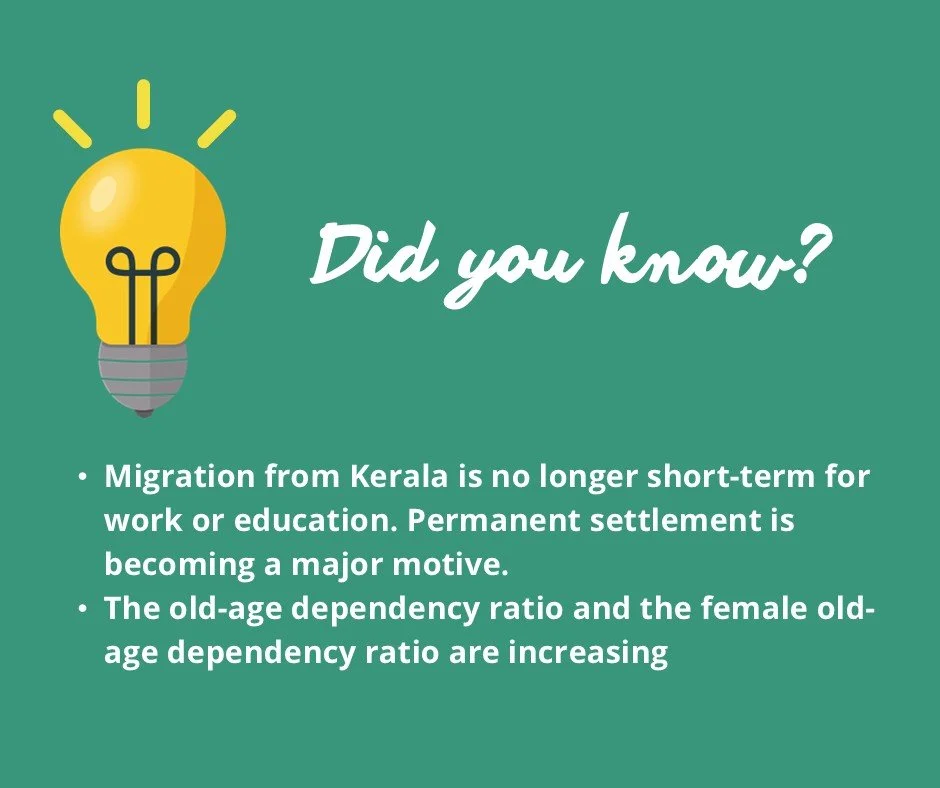
“Student migration has doubled from Kerala in five years post COVID-19”
- Kerala Migration Survey

Key Social Impacts
-
The large-scale migration of working-age adults has weakened traditional family caregiving structures, leading many elderly to face loneliness and reduced daily support.
-
Older adults, experience higher rates of chronic illnesses and mental health challengesion text goes here
-
Demand for old-age homes and institutional care, which only a a few people can afford
-
Kerala needs geriatric policies that are inclusive, compassionate and those which promote community engagement, gender-sensitive care
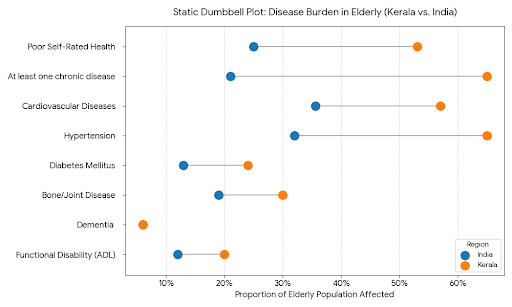
Kerala elderly have a significantly higher disease burden
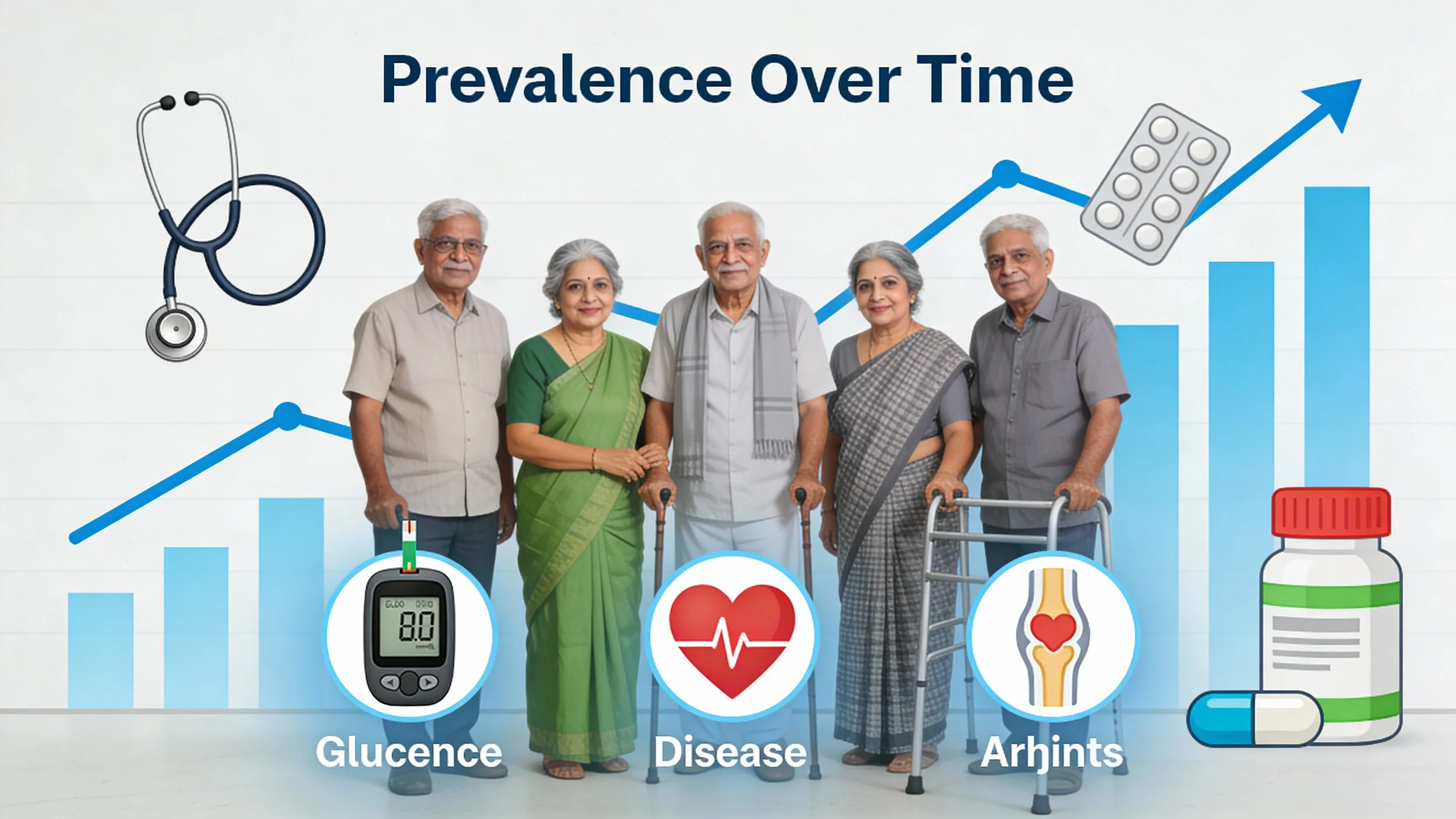
• Kerala’s elderly report poorer health: About 1 in 5 older adults in Kerala rate their health as poor, three times higher than the national average.
• More disability in daily activities: Kerala’s older adults face higher difficulty with basic tasks (20% vs 12% nationally).
• Higher chronic disease load: Kerala has more hypertension, diabetes, arthritis, and heart disease, often with multiple conditions in the same person.
• Greater mental health burden: High depressive symptoms are common and closely linked to multimorbidity.
• Ageing population effect: Kerala’s faster ageing leads to more dementia and age-related disability compared with the rest of India.
What Are the Implications
-
Home care, community care and trained caregivers.
-
To manage multiple chronic conditions
-
On families and the health system as care needs rise
-
Preventive care, mental health support, fall prevention and social protection.
Carenexs Concerns
-
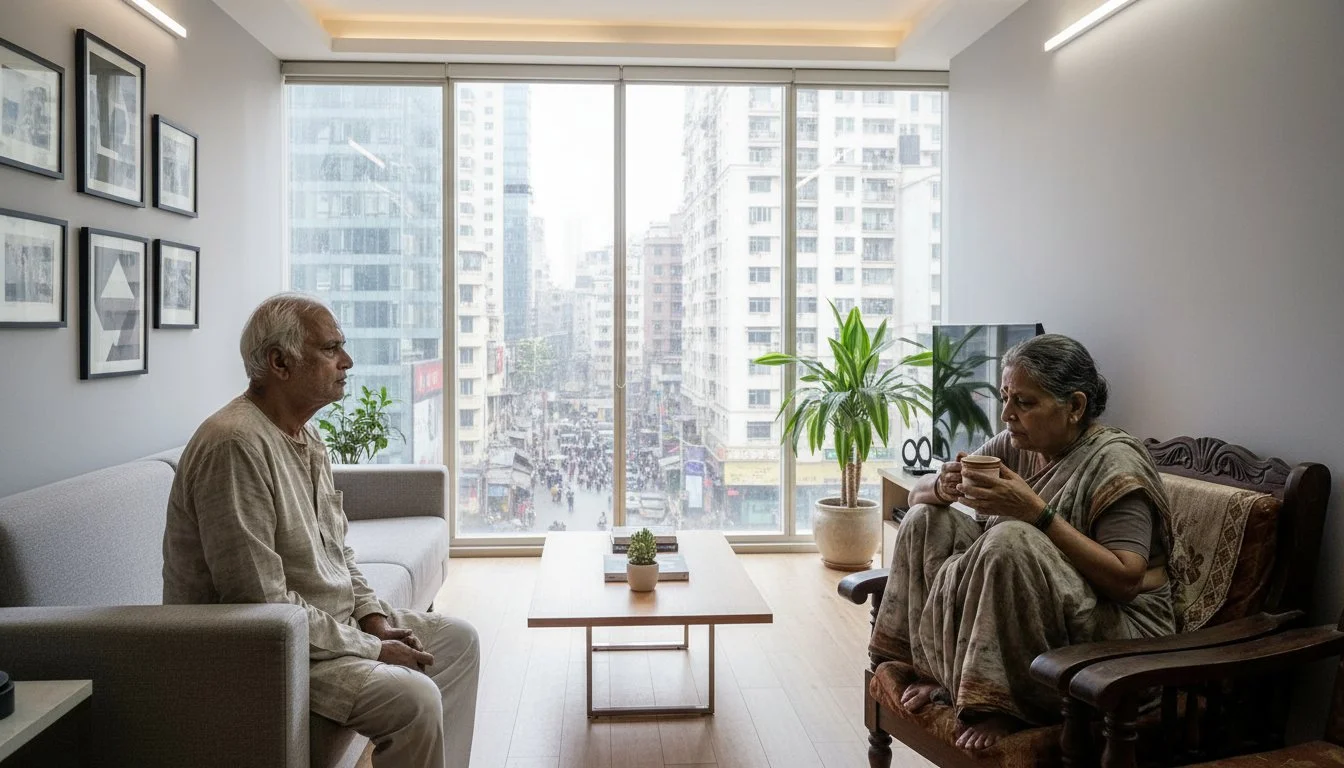
Social Isolation & Loneliness
Many elderly members experience emotional distress due to reduced family interaction and limited social engagement. About 5.1% of older adults in Kerala live alone (LASI). Additionally, migration trends have left over 21 lakh homes in Kerala occupied only by elderly residents, highlighting a significant issue of isolation.
-
Rising Hospitalization
Increased prevalence of chronic illnesses and frailty leads to frequent hospital admissions. Kerala-specific studies (LASI) show that about 11–12% of the elderly (aged 60+) in Kerala were hospitalised in the past year, which is higher than the national average of around 8–9%.
-
Feminisation of Ageing
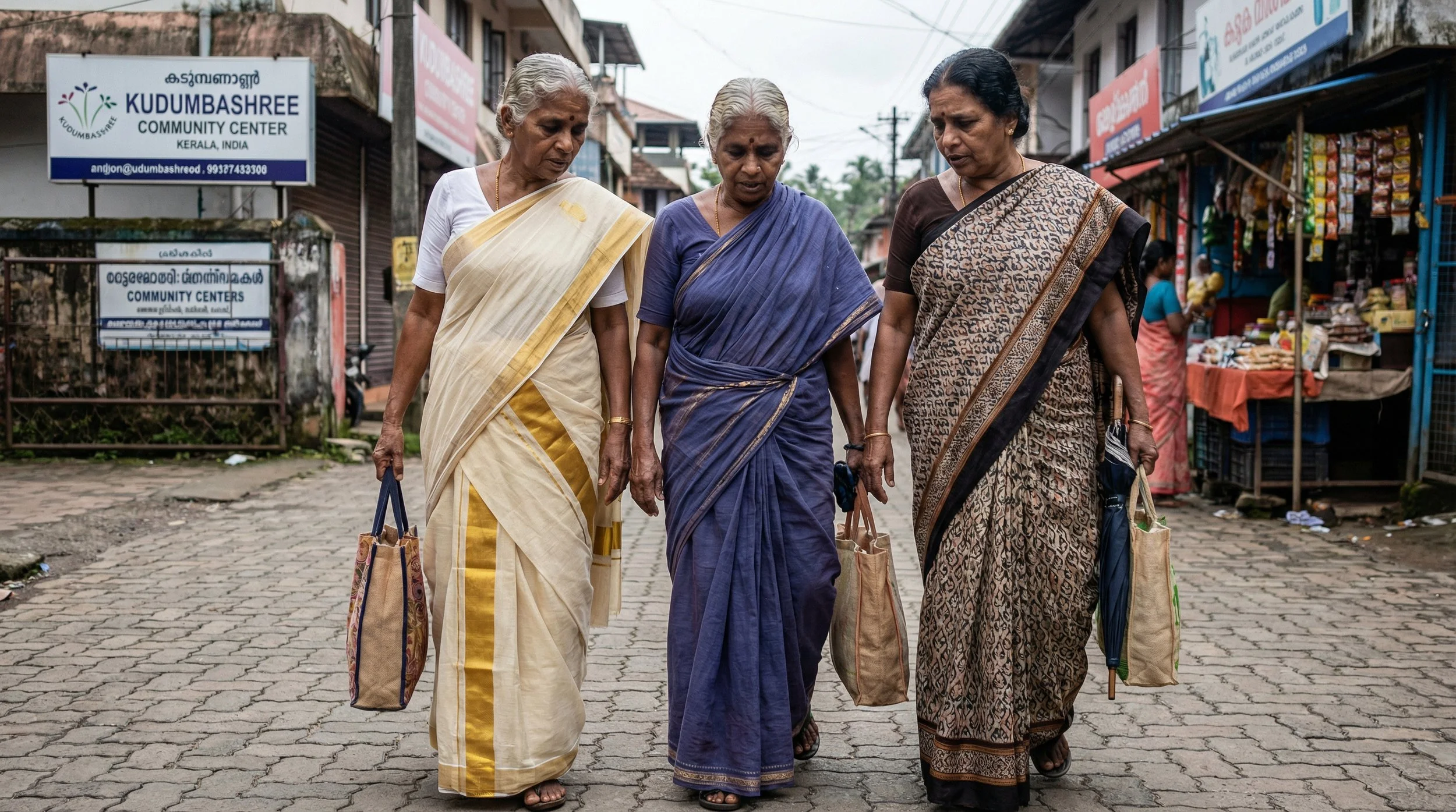
Women in Kerala live significantly longer than men, (expectancy of 78.4 years compared to 71.9 years for men). At age 60, women can expect 22 more years of life, versus 18 years for men, leading to high rates of widowhood and economic dependency — 77% of elderly women rely on children and 66% on government support.
-

Escalating Health Expenditure
Kerala has high out-of-pocket health expenditures in India. Over 93% of inpatient costs are paid out-of-pocket, and 34.7% of households face catastrophic health spending. Chronic disease management adds to the burden, making long term care financially challenging for seniors.